
Summary
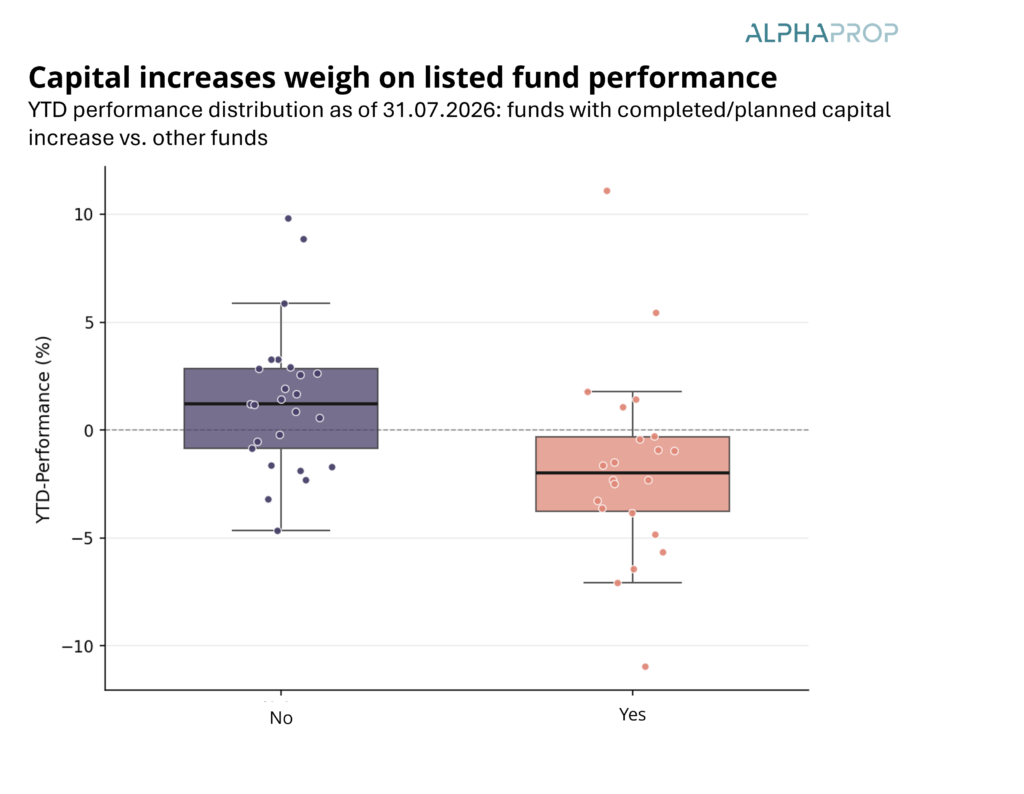
- Capital increases as performance drivers: It is not size, sector, or region, but rather capital market activity that correlates most strongly with year-to-date performance.
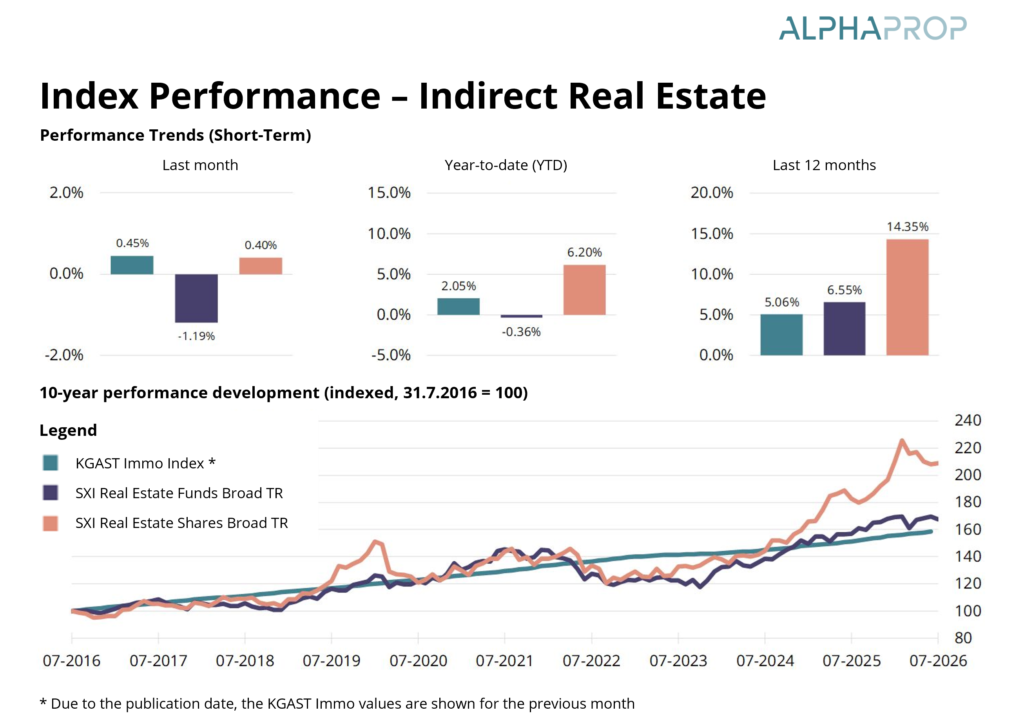
- Subdued index performance: As of the end of July, the SWIIT remains slightly in the red year-to-date, while listed real estate stocks have gained over 6%. Premiums are down by a good 32% from their February highs.
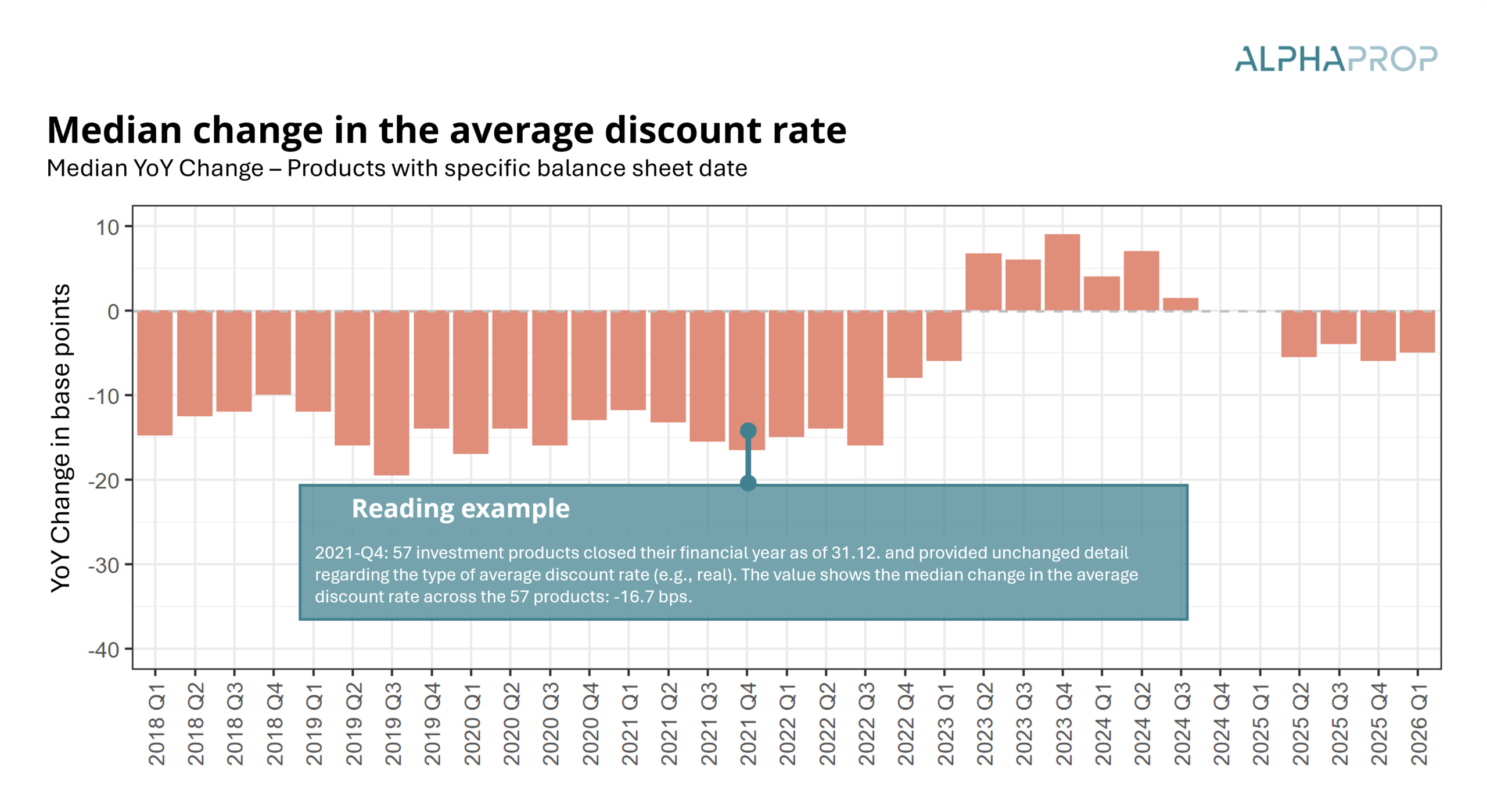
- Discount rates continue to decline, while revaluations remain intact: Real discount rates are continuing to decline slightly as of Q1 2026. Across 15 portfolios (CHF 24.4 billion market value), residential properties appreciated by 2.2% year-over-year, while commercial properties appreciated by 0.6%.
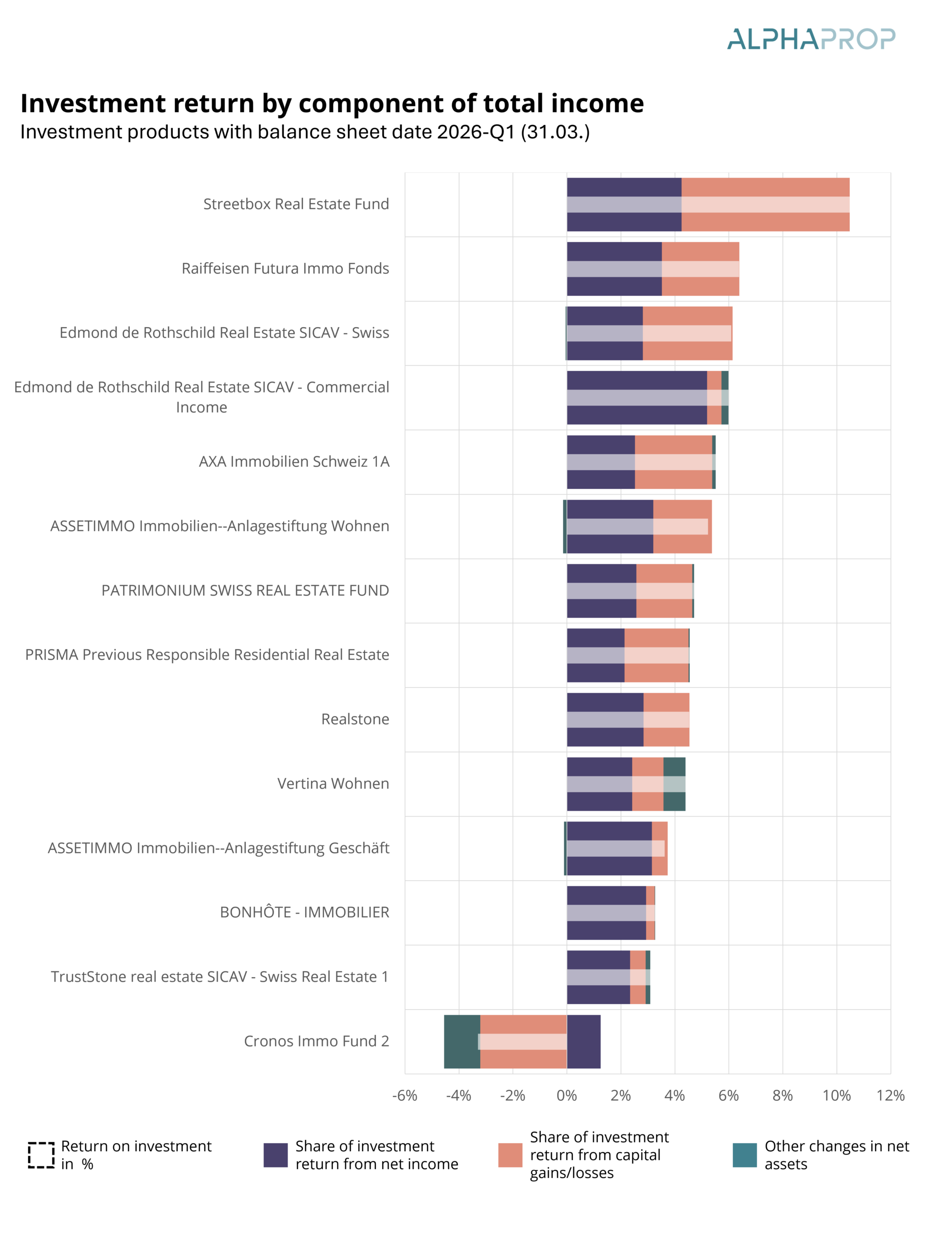
- Solid, broadly diversified operating performance: The 15 investment products as of March 31, 2026, generated an average return on investment of 4.61%.
Capital increases dampen performance
The market for indirect Swiss real estate investments is performing unremarkably in the summer of 2026, with the focus on operational performance. Following a turbulent spring and the June 14 vote on the Zurich Housing Protection Initiative, market sentiment has calmed down again. The SWIIT Index of listed funds remains slightly negative year-to-date (YTD) as of the end of July, while listed real estate stocks have posted a return of over 6%. As of the end of June, the KGAST stands at 2.05%, slightly below the long-term average. Premiums on listed real estate funds in the SWIIT currently stand at just over 32% (August 5, 2026), well below the February highs. However, the 10-year CHF swap rate, at 0.635%, is also higher than it has been in some time.
As in the previous year, the volume of capital increases is very high. Across all funds (listed and unlisted), CHF 2.8 billion has already been subscribed, with an additional CHF 1.1 billion announced for the remainder of the year—though a significant portion of that is likely to come in Q4. These inflows are reflected in the funds’ performance. The drivers of YTD performance are not size, utilization, or market region, but rather capital market activity—which shows the strongest correlation with YTD performance. If we exclude funds with an initial public offering (IPO) scheduled for 2026, funds with completed or announced capital increases (22 funds) show a YTD performance that is more than 3 percentage points lower—both in the median and the average—than the group without a capital increase in 2026 (25 funds). Of course, there are outliers in both directions in both groups.
Discount Rates Continue to Fall Slightly
An analysis of the annual reports as of the end of Q1 2026 shows a continued slight decline in the average real discount rates of the portfolios. Q1 is the quarter with by far the fewest transactions. The analysis covers 15 portfolios with net assets of CHF 20.6 billion and properties with a market value of CHF 24.4 billion. Within these portfolios, residential properties appreciated by 2.2% year-over-year on a market-value-weighted basis, while commercial properties appreciated by 0.6%.
The Alphaprop data portal supports the analysis and comparison of indirect real estate investments
- Clear, intuitive dashboard for the entire universe of indirect real estate investments in Switzerland
- Used by leading asset managers, pension funds, consultants and product providers
- Over 170 products with over 180 billion net assets
- Analysis option down to individual property level (over 9,500 properties)
- Create clear product comparisons and benchmark reports in PDF format
- Upload your own indirect or direct portfolio and asset-weighted presentation
Solid operating performance with broad diversification
An analysis of the 15 investment products (funds and investment foundations) as of the balance sheet date of March 31, 2026, shows an average investment return of 4.61%. However, the range is very wide, from -3.3% to 10.5%. On average, 2.95% was generated from net income and 1.7% from investment income.
Methodology used to present the investment return
The chart shows the investment return of all real estate funds and investment foundations with a focus on Swiss real estate that close their financial year on a defined balance sheet date (30.09; incl. products closing on 31.10) and whose data was published and available at the time the analysis was prepared.
The investment return is divided into a component from the net income and a component from the capital return. The respective portions are calculated per unit on the basis of the change at the end of the year. In the event of capital increases, income from the sale of units and allocations/withdrawals of depreciation that affect net assets, a residual value may arise, which we report separately.
The chart represents a snapshot of the current market environment and does not constitute an investment recommendation.
Positive Market Sentiment Despite Challenges
Capital market activity remains high, reflecting the continued underlying interest in indirect real estate investments and real estate investments in general. Ultimately, interest rate trends will be the decisive factor. Despite volatile oil prices, inflation in Switzerland remained low at 0.4% in July, according to the Federal Statistical Office (FSO).
The first half of the year saw a great deal of activity, including fund launches and three initial public offerings (IPOs). The legal completion of the merger of the three UBS funds—LivingPlus, Hospitality, and Residentia—into the new UBS LivingPlus is now scheduled for September 30, 2026, retroactive to June 30, 2026. This is likely to be positive for the merged fund, given that the affected funds have shown subdued performance since the premium adjustment following the merger announcement in November 2024.